
Smartwatches have evolved from everyday fitness trackers into essential gear for hiking, trail running, mountaineering and backcountry exploration. Far more than simple step counters, they deliver targeted tools that support both athletic performance and critical safety in remote, unpredictable outdoor environments.
Reliable Navigation & Route Security
Built-in multi-satellite positioning delivers accurate location tracking even in dense forests, deep valleys and high-altitude terrain where mobile phone signals often fail. Users can preload planned routes and waypoints, and receive real-time on-course guidance to stay on track. The watch automatically records a full GPS track of the journey, allowing hikers and runners to retrace their path if visibility drops or they stray from the route, eliminating the risk of getting lost in unfamiliar wilderness
Real-Time Physical Monitoring & Pacing Control
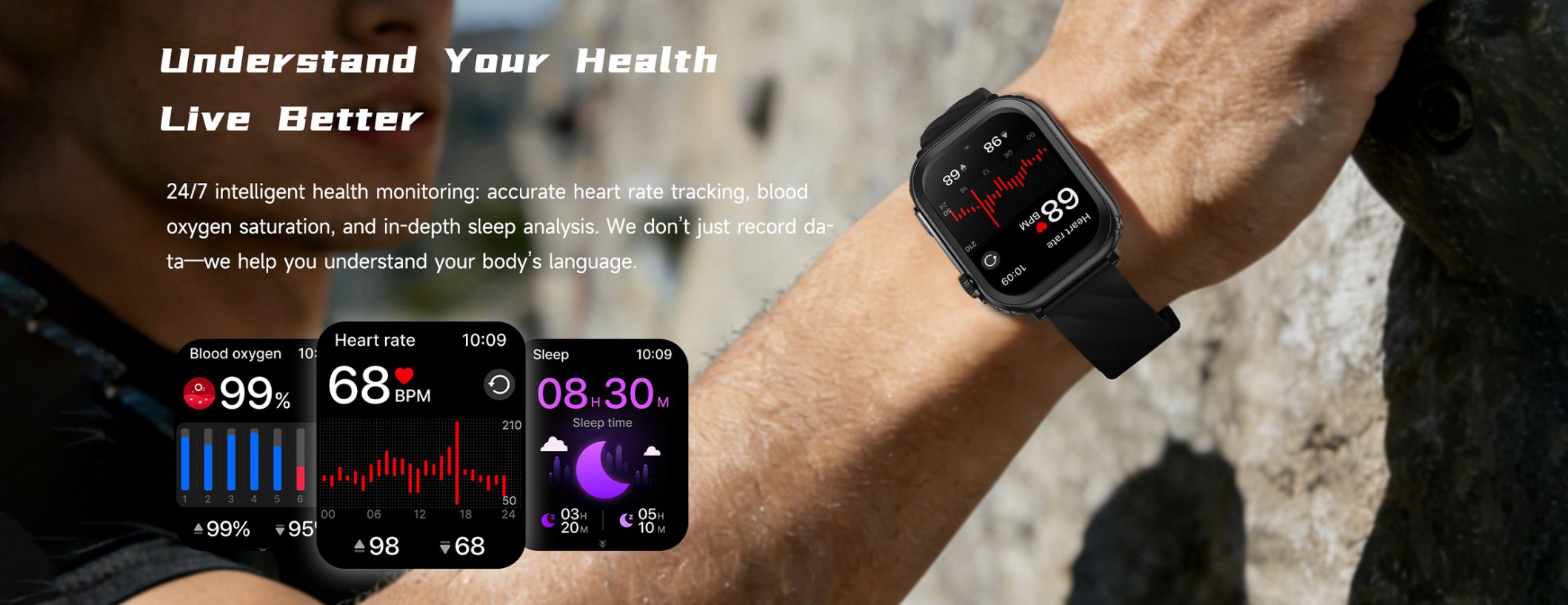
On-wrist sensors continuously track heart rate, elevation gain, pace, distance and calorie burn in real time. This live feedback helps outdoor athletes adjust their effort level according to terrain and their own physical condition, avoiding premature fatigue on long climbs or technical sections. For multi-hour activities, the watch can also alert users when it’s time to refuel or rest, supporting steadier, more sustainable performance across full-day outings.
Built-In Emergency Safety Response
Many outdoor-focused smartwatches include incident detection features that recognize hard falls or sudden impacts. If the wearer is unresponsive after an on-wrist alert, the watch can automatically share exact GPS coordinates with pre-set emergency contacts or local rescue services. Manual SOS buttons provide a fast, one-touch way to call for help when injured or lost, even when there is no mobile phone service nearby.
Environmental Awareness & Weather Risk Alerts
Integrated barometric altimeters track both elevation changes and shifts in air pressure. Sudden drops in pressure can signal approaching storms, giving users advance warning to turn back or seek shelter before weather worsens. For high-altitude trips, real-time altitude data also helps hikers monitor acclimatization progress, reducing the risk of altitude-related illness during mountain ascents.